Scroll down to view other blog posts from many other weddings and events.

Newport Wedding Photography Examples That Help

If you are comparing photographers, looking through newport wedding photography examples is one of the quickest ways to work out what you are actually paying for. A price list matters, of course, but photographs show timing, consistency, people skills and whether a photographer can handle the real pace of a wedding day in South Wales.

For most couples, the challenge is not finding a few nice images. It is working out whether a photographer can deliver strong results from start to finish, in different venues, in changing weather and with all the little pressures that come with a live event. That is where examples become genuinely useful.

What good Newport wedding photography examples should show

A strong portfolio should not only feature golden-hour portraits and one or two dramatic shots. It should show a full wedding story. That means the quieter parts of the day, the busy group photographs, the ceremony, speeches, evening atmosphere and those small in-between moments that couples often miss while everything is happening around them.

In Newport and the surrounding area, this matters even more because wedding settings vary so much. One couple may marry in a hotel with darker indoor spaces, another in a registry office with limited room to move, and another in a church followed by a reception in a marquee or country venue. Good examples prove that a photographer is not dependent on one type of location or one perfect patch of sunlight.

You should expect to see clean, well-exposed images in bright and dull weather, flattering portraits without awkward posing, and natural expressions during the candid parts of the day. If every example looks heavily staged, that can be a sign that the photographer is stronger at styled shoots than real weddings.

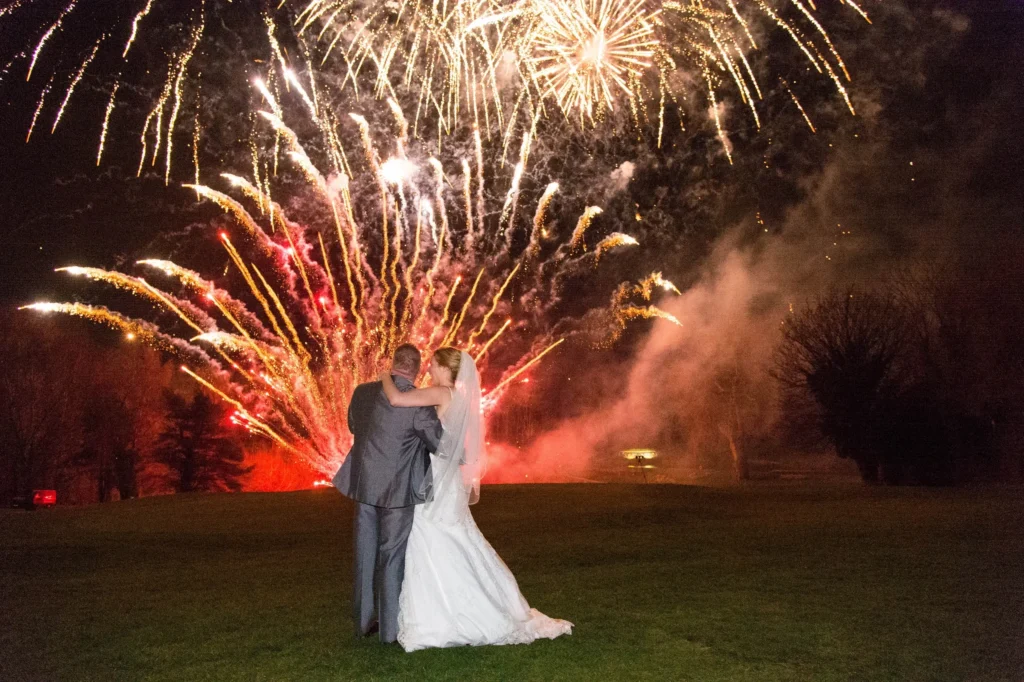
Two brides in wedding dresses sharing a moment under a white umbrella as colourful fireworks light up the evening sky in a garden.

Wedding Photography Firework Display

Newport wedding photography examples by part of the day

The easiest way to judge a portfolio is to think through a wedding in sequence. Looking at examples in this way gives you a clearer picture than simply scrolling through highlights.

Bridal preparations and morning coverage

Morning photographs often reveal a lot about experience. These are fast-moving parts of the day, often in tighter rooms with mixed lighting from windows, lamps and mirrors. Good examples here should feel calm, flattering and organised. Hair and make-up moments, dress details, family reactions and final preparations should look polished without feeling forced.

This is also where a photographer’s people skills begin to show. If the images feel natural, relaxed and well-timed, that usually reflects someone who knows how to work around the room without adding stress.

Ceremony photographs

Ceremonies are one of the least forgiving parts of the day. There are no second chances for the entrance, the vows, the ring exchange or the first kiss. When reviewing examples, look for clear angles, good timing and respectful coverage. The photographs should capture emotion without becoming distracting.

Different venues in Newport create different technical challenges. Churches can be dim, registry offices can be compact, and licensed venues may have awkward backlighting. Reliable ceremony examples show that the photographer can adapt rather than rely on ideal conditions.

Group photographs

Group shots are sometimes treated as basic, but they are often the pictures families value for years. Good examples should show tidy composition, everyone visible, and sensible use of space and background. A photographer who can organise groups quickly and clearly helps the day run better.

This is also where experience offers real value. Couples often underestimate how long family groupings can take, especially if guests drift off for a drink. A photographer who manages this confidently saves time and keeps things moving.

Couple portraits

Portraits matter, but they should suit the couple rather than look copied from a trend. Some Newport wedding photography examples will be romantic and softly lit, others more relaxed and documentary in feel. Neither is automatically better. What matters is whether the couple look comfortable and whether the photographs feel genuine.

This is worth paying attention to if you are camera-shy. Natural-looking portraits usually come from direction that is simple and reassuring, not overly complicated posing. A good photographer knows how to make the most of a venue, even if there are only a few minutes available between other parts of the day.

Reception and evening photographs

Evening coverage is often where weaker portfolios thin out. Speeches, cake cutting, first dance and party shots involve changing light, quick reactions and busy backgrounds. Examples should still look sharp, lively and well controlled.

If you are planning a full day package, do not just judge a photographer on daylight portraits. Evening photographs tell you a great deal about consistency and whether the quality carries on when conditions become harder.

What Newport venues and settings can reveal

Local knowledge can help, but it is not the only thing that matters. A professional photographer does not need every venue to be familiar in order to produce strong results. Even so, examples from Newport and nearby areas can be reassuring because they show an understanding of local settings and weather.

A waterfront backdrop, an urban city-centre location, a country house garden or a simple registry office each call for a slightly different approach. Newport wedding photography examples should show that the photographer can make the most of whatever the day offers, rather than trying to force every wedding into the same visual style.

This is especially helpful in South Wales, where weather can change quickly. Bright sunshine at midday, overcast skies in the afternoon and rain just before portraits are all realistic possibilities. Good examples should show flexibility, not just perfection.

How to tell the difference between highlights and real consistency

Almost every photographer can produce a handful of excellent images across a season. The real question is whether they can deliver a full gallery with the same standard running through it.

When you review examples, notice whether the quality stays strong across different couples, different times of year and different venues. If only a few images stand out while the rest feel ordinary, that is worth noting. Weddings are not won by five impressive photographs. They are remembered through the full collection.

It also helps to look at how people are photographed. Are skin tones natural? Do guests look comfortable? Are backgrounds distracting? Are indoor images just as dependable as outdoor ones? These details tend to separate experienced full-time professionals from photographers who are still building confidence.

Style matters, but reliability matters more

Every couple has their own taste. Some prefer more traditional coverage, some want natural documentary moments, and many want a balanced mix of both. There is nothing wrong with choosing based on style. It is your wedding, and the photographs should feel right to you.

That said, style on its own is not enough. Reliable exposure, clear focus, sensible timing and calm organisation matter just as much. The best Newport wedding photography examples do not only look attractive. They show that the photographer can handle pressure, guide people politely and keep standards high throughout the day.

This is often where value for money becomes clearer. Affordable does not need to mean basic. It should mean fair pricing for a professional service that covers the day properly and delivers quality you can trust.

Questions worth asking after viewing examples

Once a portfolio has caught your attention, the next step is practical. Ask whether the examples shown are from full real weddings, whether similar coverage is available for your venue type, and what is included in the package. You can also ask how the photographer works in poor weather, low light or tight schedules.

These questions are not about catching anyone out. They are about making sure the work you admire matches the service you will receive. A reassuring photographer should be happy to explain how they approach the day and what couples can realistically expect.

For couples balancing quality with budget, this conversation is often just as important as the images themselves. Clear answers, straightforward pricing and a proven track record make booking feel much safer.

Why examples help couples book with confidence

Choosing a wedding photographer is personal, but it should not feel like guesswork. The right examples help you picture your own day more clearly. They show what happens in real venues, in real weather, with real timelines and real people who are not professional models.

That is why strong local portfolio work matters so much. It helps couples move past sales talk and judge the one thing that counts most – whether the photographer can consistently capture the day well, treat people properly and offer genuine value.

If you are looking at Newport wedding photography examples, trust the work that feels honest, complete and dependable. A few striking images can catch your eye, but a photographer who can handle the full day with care is the one you will be thankful for long after the wedding has finished.

Guide to Corporate Headshot Sessions

A good corporate headshot often has to do several jobs at once. It needs to look professional without feeling stiff, approachable without looking too casual, and consistent across a team without making everyone look identical. That is why a proper guide to corporate headshot sessions matters. When the planning is right, the session runs smoothly, staff feel more comfortable, and the final images work far better across websites, LinkedIn profiles, press releases and internal communications.

For many businesses, headshots are booked only when they become urgently needed. A new website is going live, a senior hire has joined, an award submission needs images, or the marketing team has realised half the staff photos are old, mismatched or taken on phones. Leaving it late can create unnecessary pressure. A little preparation makes a noticeable difference, both in the look of the photographs and in how efficient the day feels for everyone involved.

Why a corporate headshot session needs planning

Headshots may seem simple compared with a full event or brand shoot, but they are rarely as quick as people expect. The practical side includes choosing the right location, deciding whether the background should be plain or environmental, organising a schedule and making sure staff know what to wear. The people side matters just as much. Most team members are not comfortable in front of a camera, and that can show if the session feels rushed or unclear.

A well-planned session helps create consistency, which is particularly important for companies updating team pages or preparing images for PR use. If one person is photographed near a window, another against a dark wall and someone else outside in bright sun, the set can feel disjointed. That may not matter for a small informal business, but for many companies it weakens the overall presentation.

There is also a value-for-money point to consider. When a business books a professional photographer, it makes sense to get images that can be used across multiple platforms for a reasonable period of time. Spending a little longer on preparation often avoids the cost of reshoots later.

Guide to corporate headshot sessions for different businesses

Not every business needs the same style of headshot. A law firm, a construction company, a creative agency and a hotel group may all want professional portraits, but the finished look should reflect the brand and audience.

For some companies, a clean, neutral background is the best choice. It keeps attention on the person and works well for websites, speaking engagements and printed materials. For others, a workplace setting adds useful context. A headshot taken in an office, studio or customer-facing space can feel more natural and better suited to the brand.

The trade-off is straightforward. Plain backgrounds are timeless and easy to keep consistent. Environmental portraits can feel warmer and more distinctive, but they depend more on location, lighting and visual clutter. The right option depends on where the images will be used and how formal the business wants to appear.

What to decide before the session

The most useful corporate headshot sessions start with a few practical decisions. First, think about purpose. Are the images mainly for LinkedIn and staff profiles, or will they also be used for brochures, press features and conference materials? The answer influences framing, background and expression.

Next, consider consistency. If the whole team is being photographed, it helps to agree on a common look. That does not mean everyone has to wear the same colours, but there should be a shared standard. Similar framing, lighting and background choices make the final set look intentional.

Timing matters too. If people are being pulled out of meetings with no warning, the session can feel disruptive. It is better to give each person a clear slot and simple preparation advice in advance. Even ten minutes per person can work well when the day is organised properly.

It is also worth deciding who needs what. Senior leadership might need a wider selection for media use, while other staff may only need one or two polished images for internal and online profiles. Knowing that beforehand helps the photographer manage time sensibly.

What staff should wear

Clothing is one of the most common worries, and rightly so. What someone wears can affect whether a headshot looks current, flattering and professional. The safest advice is to dress as you would for an important meeting with a client, but with a little more attention to fit and simplicity.

Block colours usually work better than busy patterns. Strong logos, large graphics and very fine stripes can distract or date the image quickly. Mid-tones and darker shades often photograph well, though the best choice depends on skin tone, hair colour and background. White shirts can look crisp and smart, but they need careful lighting. Black can be elegant, though it can also lose detail if the lighting is not balanced.

For team sessions, coordinated is better than identical. Asking everyone to stay within a sensible dress code creates a professional look without making people feel awkward. The goal is for the viewer to notice the person first, not the outfit.

How to help people feel comfortable on camera

This is where experience really counts. Most people are not models, and they should not be expected to behave like them. A good headshot session is not about forcing unnatural poses or overly polished expressions. It is about guiding people into flattering positions, keeping the atmosphere relaxed and making small adjustments that improve the photograph.

The best results usually come when people are given clear, simple direction. Things like how to angle the shoulders, where to place the chin, and when to soften the expression can make a significant difference. Small changes are often all that is needed.

It also helps not to overcomplicate the process. If staff think the session will be uncomfortable, they may arrive tense. When it is handled calmly and professionally, most people settle within a few minutes. That shows in the final image.

The practical side of the session day

A smooth session day usually depends on three things: space, timing and communication. The chosen area needs enough room for lighting and a clean setup, but it does not have to be large. Offices, meeting rooms, reception areas and sheltered outdoor spaces can all work, depending on the look required.

Lighting is one area where shortcuts tend to show. Relying on overhead office lights or a random corner of the building often produces unflattering results. Professional lighting allows a photographer to create a more polished and consistent look, even in locations that are not naturally ideal.

Scheduling should also be realistic. Some people will be camera-ready and finished quickly. Others will need a little more reassurance and direction. If every slot is squeezed too tightly, the pressure builds across the day. A sensible timetable keeps the quality up and the stress down.

A guide to corporate headshot sessions after the shoot

The session itself is only part of the process. Businesses should also think about how the final images will be selected, edited and used. Good retouching should be natural. The aim is not to make people look unlike themselves, but to present them at their best with clean, professional finishing.

It helps to keep future use in mind. Headshots may need to be cropped in different ways for websites, social media and print. A properly shot image gives more flexibility later. This is another reason why quick, improvised staff photos often become a false economy.

Companies should also think ahead about updates. Staff changes happen. New starters join, roles change and teams grow. A clear approach to style and setup makes it much easier to add new headshots later without the whole gallery looking mismatched.

For businesses across South Wales, the West of England and beyond, that consistency can be especially useful when teams are spread across offices or when staff are photographed over time rather than all at once.

Common mistakes to avoid

The biggest mistake is treating headshots as an afterthought. If they are done in a hurry, with no clear brief and no thought for consistency, the results usually look exactly that way. Another common issue is giving staff too little information. People do better when they know what to expect.

There is also a tendency to choose style over practicality. A dramatic setup might look impressive for one campaign, but if the business needs images that will still work across profiles and marketing materials next year, a cleaner and more timeless approach is often the better investment.

And finally, there is the temptation to keep using outdated images for too long. A headshot does not need replacing every few months, but if it no longer reflects the person or the brand, it is probably time.

A corporate headshot session should not feel like a chore to get through. Done properly, it is a straightforward way to present your team with confidence, consistency and professionalism – and that starts long before anyone steps in front of the camera.

How to Pose Naturally for Wedding Photos

The camera comes out, everyone turns to look, and suddenly you forget what to do with your hands. That is usually the moment couples start searching for how to pose naturally wedding photos, because nobody wants pictures that feel forced or awkward. The good news is that natural-looking wedding photographs rarely come from perfect modelling. They come from good direction, a bit of movement, and feeling comfortable enough to be yourselves.

Why natural wedding posing matters

A wedding is not a fashion shoot. You want photographs that look polished, but you also want them to feel honest. Years later, the images that matter most are usually the ones where you recognise yourselves straight away, not the ones where you look overly posed or strangely formal.

Natural posing also helps with confidence on the day. Most couples are not used to being photographed professionally, so if a photographer expects you to invent flattering poses on the spot, things can become uncomfortable very quickly. Clear guidance makes a huge difference. The aim is not to leave you to it and hope for the best. It is to give just enough direction that you look relaxed, connected and flattering from every angle.

How to pose naturally for wedding photos without feeling awkward

The biggest shift is to stop thinking in terms of posing and start thinking in terms of interaction. If you are simply told to stand still and smile, you will often look stiff. If you are asked to walk together, lean in, talk quietly, or react to each other, your expressions tend to become far more genuine.

Posture matters, but it should not look rigid. Standing tall, relaxing the shoulders, and keeping a soft bend in the arms creates shape without making you feel like a mannequin. Small adjustments are usually enough. A slight turn of the body is often more flattering than facing the camera square on, and keeping a little space between your arms and torso helps avoid a boxed-in look.

Hands are a common worry, especially for grooms who are not sure where to put them. The answer is simple – give them a purpose. Hold hands, rest one hand gently on a waist, straighten a jacket cuff, hold the bouquet naturally, or place a hand in a pocket with the thumb out. The minute hands have something to do, the whole pose feels easier.

Focus on each other, not the lens

Some of the strongest wedding images happen when couples stop performing for the camera. Looking at each other, sharing a quick comment, laughing at something under your breath, or taking a slow walk together all create expressions that are difficult to fake.

That does not mean every photograph should ignore the camera. You will still want some classic images where you both look directly towards it. But when every shot becomes a straight smile at the lens, the gallery can feel repetitive. A good balance between directed portraits and natural interaction gives you both polish and personality.

Movement makes everything easier

If you feel uncomfortable standing still, movement is usually the answer. Walking hand in hand, turning towards each other, brushing hair away from the face, or leaning in for a quiet moment all help loosen things up.

Movement is especially useful during couple portraits because it stops you overthinking. It also works well in changeable British weather. If it is breezy in Cardiff, drizzly in Newport or bright and windy on the coast, natural movement can actually make the photographs feel more alive rather than too staged.

The best poses are usually the simplest

Couples often assume they need lots of different poses to create a strong wedding gallery. In reality, the best results usually come from a handful of simple setups, each with small variations.

Standing close together is the obvious one, but closeness matters more than the exact foot position. If there is a visible gap between you, the image can feel disconnected. If you stand naturally close, with shoulders slightly angled and heads gently turned towards each other, the photograph will already feel more relaxed.

Walking shots work well because they create natural rhythm. You do not need to stride like models. Just walk slowly, talk to each other, and ignore the idea of doing it perfectly. A slower pace usually looks better on camera and gives more opportunity for natural smiles.

The nearly-kiss is another favourite because it feels intimate without forcing a big dramatic moment. Foreheads together, noses close, eyes soft – it is simple, flattering and timeless. Sitting poses can work beautifully too, particularly if one of you turns slightly towards the other rather than sitting bolt upright.

Group photos need natural posing too

When people think about how to pose naturally wedding images, they often focus only on couple portraits. But family groups and bridal party photographs benefit from the same approach.

The key is arrangement rather than complexity. People should stand close enough to look connected, with heights balanced and no one left half-hidden behind someone taller. Once everyone is in place, a quick prompt often works better than demanding a fixed smile. Asking people to look at the couple for one frame, then back to the camera, can create a set of images that feel less formal while still covering the essentials.

Bridal party shots are a good chance to relax things further. A tidy version is important, but so is one with movement, conversation, and a bit of personality. That usually gives you a stronger mix than a full set of identical lined-up images.

What to avoid if you want natural-looking wedding photographs

Overthinking is the biggest problem. The more you worry about your smile, your stance, or whether you look strange from one side, the more tension shows up in the image. Good photographers expect this and guide you through it, but it helps if you remind yourselves that the goal is not perfection.

It is also worth avoiding poses that do not suit your personalities. If you are naturally reserved, overly dramatic dip-kiss photographs may feel uncomfortable. If you are playful and relaxed, very stiff formal posing may not feel like you either. There is no single correct style. It depends on the couple, the setting, the pace of the day, and the kind of gallery you want to look back on.

Rushing can cause problems as well. If portraits are squeezed into five frantic minutes between the wedding breakfast and speeches, nobody is likely to feel calm. Building in a little breathing space helps far more than people realise. Even ten to fifteen uninterrupted minutes can be enough to create a set of natural portraits without taking you away from your guests for too long.

Choosing a photographer who helps you pose naturally

A lot of natural posing comes down to the photographer, not the couple. Experience matters here. Someone who has photographed many weddings will know how to read people quickly, spot flattering angles, and give straightforward direction without making it feel like hard work.

That guidance should be reassuring rather than overbearing. You do not want to be barked into position, but you also do not want to be abandoned with a vague instruction to just act natural. Most couples need a middle ground – calm prompts, simple adjustments, and enough confidence from the photographer that they can relax into the process.

This is one reason many couples choose experienced professionals such as Premiere Photography. The value is not only in owning a good camera. It is in knowing how to help real people look their best under real wedding-day conditions, whether that means bright sun, low light, a tight schedule, or two people who are convinced they are awkward in front of the lens.

A pre-wedding shoot can help, but it is not essential

Some couples feel much more at ease after an engagement or pre-wedding session because it shows them that being photographed is not as daunting as they expected. It gives you a feel for how your photographer works and helps you learn what feels natural.

That said, it is not essential. Plenty of couples have never had professional photographs taken before their wedding and still end up with relaxed, flattering images. What matters more is trust, clear communication and enough direction on the day.

A few practical ways to feel more relaxed on the day

Wear your outfit properly before the wedding day if you can, especially shoes and anything with structure. If you are tugging at straps, stiff in a new suit, or worried about a veil moving out of place, that discomfort can show. Familiarity helps.

Give yourselves permission to slow down during portraits. Take a breath, listen to the direction, and focus on each other rather than on whether every strand of hair is perfect. If something feels unnatural, say so. A professional photographer would much rather adjust the pose than push you into one that does not suit you.

Most of all, remember that natural wedding photos are not about pretending the camera is not there. They are about feeling comfortable enough that your expressions, body language and connection still look like your own. If you have the right photographer and the right approach, that is far easier than most couples expect.

On the day, you do not need to know how to model. You only need to show up, trust the process, and make a little space to enjoy each other in the middle of it all.

How to Prepare for Business Headshots

A rushed headshot usually looks rushed. You can spot it in a moment – a creased shirt, tired eyes, a stiff smile, or someone wearing something that made sense at 7am and not at all under studio lights. If you want to prepare for business headshots properly, the goal is not to look overly polished or unlike yourself. It is to look like the best, most confident version of the person your clients, colleagues and customers will actually meet.

For most people, that starts with a simple truth. A business headshot is not just a nice photo for LinkedIn. It shapes first impressions on websites, proposals, speaker profiles, press features and company directories. A strong image suggests professionalism, approachability and attention to detail. A poor one can quietly work against you, even if your experience speaks for itself.

Why it matters to prepare for business headshots

Good headshots do a specific job. They help people trust you before you have spoken to them. That matters whether you run a local business in Newport, manage a team in Cardiff, attend events in Bristol, or need consistent staff portraits across several locations.

Preparation makes a noticeable difference because cameras are honest. They pick up small details that are easy to miss in the mirror, from shiny skin and flyaway hairs to jacket fit and posture. The right preparation does not need to be expensive or complicated, but it does need a bit of thought.

There is also a practical side to it. Turning up ready means the session runs better, you feel more relaxed and you are far more likely to get a set of images you can use across multiple platforms. That is better value for money and saves having to redo the shoot a few months later.

Start with where the photos will be used

Before you choose an outfit or think about grooming, ask where the headshots are going. A solicitor, estate agent, consultant and creative director may all need a professional image, but not necessarily the same style of one.

If the photos are for a corporate website or annual report, a cleaner and more formal look is often best. If they are for social media, personal branding or a small business site, you may want something slightly more relaxed and approachable. Neither option is right in every case. It depends on your industry, your audience and how you want your business to come across.

If several team members are being photographed together, consistency matters. Similar levels of formality, coordinated tones and a shared background help the set look professional. It does not mean everyone needs to dress identically, but the images should look like they belong to the same business.

What to wear for business headshots

Clothing is where most people overthink things. The safest approach is usually to wear something smart, well-fitted and comfortable enough that you can move and breathe normally. If you feel awkward in it, that tends to show.

Solid colours tend to photograph better than busy patterns. Strong stripes, tiny checks and large logos can distract from your face. Mid-tones and richer colours often work well because they add shape without dominating the image. Navy, charcoal, soft blue, burgundy, forest green and neutral earth tones are usually reliable choices, depending on your colouring and role.

Black can work well, but it is not always the easiest option. In some lighting it can lose detail, especially in jackets or knitwear. Pure white can also be tricky if it is too bright compared with your skin tone. Off-white, light blue or softer neutrals often photograph more naturally.

Fit matters more than labels. A reasonably priced jacket that sits properly on the shoulders will nearly always look better than an expensive one that pulls or hangs badly. The same applies to shirts, blouses and dresses. Creases also show up more than people expect, so it is worth making sure everything is clean and pressed beforehand.

Bringing one spare option can help, especially if you are unsure whether to go slightly more formal or slightly more relaxed. A blazer, second shirt or alternate top can give a bit of variety without making the session feel complicated.

Grooming and personal presentation

You do not need a complete makeover to prepare for business headshots. The aim is simply to look tidy, rested and like yourself on a very good day.

Hair is worth planning in advance rather than sorting at the last minute. If you are having it cut, a few days before the shoot is often better than the same day, particularly if your hair needs a little time to settle. Facial hair should be neatly shaped if you usually keep it, and if you are normally clean-shaven, shaving close to the session tends to look best.

For makeup, a lighter hand is often the better option for business portraits. A natural, polished look generally ages better than something strongly trend-led. Matte products can help reduce shine under lights, and a small powder compact or blotting paper can be useful for touch-ups.

Glasses are common in business headshots, and whether to wear them depends on how people normally see you. If you wear them daily, it often makes sense to include them. Just make sure the lenses are clean. Some coatings can cause reflections, so it can be worth bringing the frames and being guided on the day.

Sleep and hydration sound basic because they are basic, but they make a difference. A decent night beforehand and a bit of water through the day can help your skin, eyes and overall expression look fresher.

The week before the shoot

Most headshot problems are avoidable if you leave yourself enough time. That means not trying new skincare the night before, not booking a haircut with an unfamiliar barber the same morning, and not leaving your outfit in a heap on a chair until five minutes before you leave.

A quick check a few days ahead helps. Try on your chosen clothes. Look at the fit standing and sitting. Check for missing buttons, lint, loose threads or anything that needs pressing. If the session is for a company team, confirm the dress guidance early so nobody arrives noticeably under or overdressed.

If you have particular concerns, mention them before the shoot rather than hoping for the best. Most people have something they worry about, whether that is posture, a preferred side, glasses glare or not knowing what to do with their hands. An experienced photographer will have dealt with all of it before.

How to feel less awkward in front of the camera

Very few people turn up for headshots saying they love being photographed. Feeling a bit self-conscious is normal, especially if you are doing this for work rather than for fun.

The good news is that confidence in headshots is usually built, not assumed. Good direction helps with posture, chin angle, eyeline and expression, so you do not have to invent it all yourself. Your part is simply to arrive without rushing, trust the process and give yourself a few minutes to settle into it.

It helps to think less about looking impressive and more about looking open, capable and approachable. For most business uses, that is far more effective than a forced grin or a serious expression that feels unnatural. A small, genuine smile usually goes further than trying too hard to look powerful.

Breathing matters more than people realise. If you hold tension in your shoulders or jaw, it shows. Relaxing between frames, rolling your shoulders back and taking a breath can make a visible difference.

On the day of your business headshots

Give yourself enough time to arrive calmly. Rushing into a session from traffic, meetings or a difficult train journey is one of the fastest ways to feel flustered in front of the camera.

Bring your outfit ready to wear, along with a spare option if you have one. A brush, comb, powder, tissues and a little water are sensible to have with you. If you are changing on site, keep clothes on a hanger if possible so they stay in good condition.

Try not to overload pockets with mobile phones, keys or wallets just before being photographed, especially if jacket shape matters. Small details affect the final image more than most people expect.

If you are arranging headshots for a whole team, allow enough time per person. Sessions run more smoothly when people are not being rushed in and out. Better results usually come when there is time for small adjustments rather than trying to force everyone through too quickly.

A final word on getting the right result

The best business headshots do not happen because someone is naturally photogenic. They happen because the preparation is sensible, the expectations are clear and the person in front of the camera feels looked after. If you keep your clothing simple, your grooming tidy and your timing realistic, you are already most of the way there. The rest is about turning up as yourself and letting experience do its job.

Saundersfoot Harbour Wedding Photographer | Affordable Wedding Photography Pembrokeshire | 20+ Years Experience

Saundersfoot Harbour & Wisemans Bridge Wedding Photographer | Affordable Wedding Photography in Pembrokeshire

Are you looking for an affordable wedding photographer at Saundersfoot Harbour or Wisemans Bridge? Premiere Photography has over 20 years of experience, 2,000+ weddings photographed, and hundreds of 5-star reviews. Professional wedding photography packages across Pembrokeshire, Tenby, Carmarthenshire, and South Wales from just £695.

If you’re planning your wedding at Saundersfoot Harbour, Wisemans Bridge, or anywhere along the stunning Pembrokeshire coastline, choosing the right wedding photographer is one of the most important decisions you’ll make. Your wedding photographs will preserve the emotions, laughter, details, and unforgettable moments of your special day for generations to come.

Premiere Photography specialise in affordable wedding photography, professional wedding photography, and budget wedding photography packages throughout Pembrokeshire, Carmarthenshire, Llanelli, and South Wales. With over 20 years of experience, more than 2,000 weddings photographed, and hundreds of 5-star reviews, we have built a reputation as one of Wales’ most trusted wedding photography companies.

Why Couples Love Weddings at Saundersfoot Harbour & Wisemans Bridge

Few wedding locations in Wales can rival the natural beauty of Saundersfoot Harbour and Wisemans Bridge. With breath-taking coastal scenery, golden beaches, dramatic cliffs, and spectacular sunsets, these locations provide the perfect backdrop for stunning wedding photography.

Whether you’re planning:

  • A traditional wedding
  • A beach wedding
  • An intimate ceremony
  • A rustic celebration
  • An LGBTQ+ wedding
  • A themed wedding
  • A large family gathering

Our experienced photographers capture every moment naturally and professionally while allowing you to relax and enjoy your wedding day.

Affordable Wedding Photography Without Compromising Quality

Many couples search online for:

  • Affordable wedding photographers in Pembrokeshire
  • Cheap wedding photography packages
  • Budget wedding photographers in South Wales
  • Professional wedding photographers near Saundersfoot
  • Wedding photography in Tenby and Pembrokeshire
  • Premiere Photography believe beautiful wedding photography should be accessible to every couple. Our affordable wedding photography packages are designed to provide exceptional value while delivering stunning, high-resolution images you’ll treasure forever.

Our packages can include:

  • Full-day wedding photography
  • Half-day wedding photography
  • High-resolution digital images
  • Online galleries
  • Wedding albums
  • Mobile apps and slideshows
  • Engagement and pre-wedding photography sessions

Packages start from as little as £695, making us one of the leading providers of affordable wedding photography in Pembrokeshire and South Wales.

Over 20 Years of Experience Capturing Weddings Across Wales

Experience matters when it comes to wedding photography. With over two decades of experience and more than 2,000 weddings and events photographed, we know how to handle every aspect of your day.

From changing weather conditions on the Pembrokeshire coast to busy wedding schedules and challenging lighting situations, our expertise ensures beautiful photographs regardless of the circumstances.

Our photographers have worked at venues throughout Pembrokeshire, Carmarthenshire, and South Wales, capturing weddings of every size, style, and theme.

Hundreds of 5-Star Reviews from Happy Couples

One of the reasons couples choose Premiere Photography is our reputation for excellent customer service and outstanding photography.

We are proud to have received hundreds of 5-star reviews from happy couples who regularly recommend us to friends and family.

Clients consistently praise our:

  • Friendly and relaxed approach
  • Professional service
  • Attention to detail
  • Ability to make guests feel comfortable
  • Exceptional value for money
  • Natural and candid photography style

Our goal is simple: to capture your wedding day authentically while creating photographs that tell your unique story.

LGBTQ+ Friendly & Inclusive Wedding Photography

LBGTQ+ Friendly Wedding Photography

Premiere Photography proudly offers inclusive LGBTQ+ wedding photography. We believe every couple deserves to feel comfortable, respected, and celebrated on their wedding day.

We have photographed many LGBTQ+ weddings and create a relaxed, supportive environment so you can truly be yourselves in front of the camera. Every love story deserves to be captured authentically and beautifully.


Our Signature Wedding Photography Style

What sets Premiere Photography apart is our ability to blend into your day naturally while still capturing every important moment. We allow your wedding to flow organically while ensuring the key memories — smiles, tears, speeches, laughter, dances, and all the little details — are preserved forever.

We combine professionalism with creativity, capturing not only the big moments but also the subtle emotions and natural interactions that make your wedding unforgettable.

We arrive fully prepared with backup equipment, extensive experience, and the ability to adapt to any venue, lighting condition, or weather situation. From sweeping countryside landscapes to intimate churches and elegant hotel venues, we thrive in every environment.


Why Choose Premiere Photography?

Couples searching for:

  • Affordable wedding photographers in Gloucestershire
  • Cheap wedding photography near Cheltenham
  • Budget wedding photographers in the Cotswolds
  • Professional Gloucestershire wedding photographers

Choose Premiere Photography because we offer exceptional quality without the luxury price tag.

Why couples book us:

  • ✅ Multi award-winning photographers
  • ✅ Affordable, budget and cheap wedding photography packages without compromising quality
  • ✅ Flexible packages tailored to your venue and wedding style
  • ✅ Professional, friendly, and discreet service
  • ✅ Full-day and half-day wedding photography options
  • ✅ Natural, relaxed and candid photography style
  • ✅ Fun, creative and emotional storytelling photography
  • LGBTQ+ inclusive photography
  • Trusted by over 2,000 clients across the UK and abroad
  • ✅ Experts in photographing church weddings, hotel weddings, and countryside venues
  • ✅ Stunning photography without the high-end price

Extensive Experience Across Pembrokeshire, Carmarthenshire & Beyond

Premiere Photography have photographed weddings at many of the region’s most popular venues including:

Ashburnham Hotel & Burry Port
Carmarthen Register Office & The Roadhouse Whitland
Broadway House Laugharne
Ivy Bush Royal Hotel Carmarthen
Saundersfoot Harbour
Sylen Lakes Nr llanelli
St David’s & Solva Pembs
The Olde Barns Penygraig Farm
Wisemans Bridge
The Plough Inn Llandeillo

This extensive venue experience allows us to confidently adapt to different wedding styles, lighting conditions, weather, and venue layouts while consistently delivering beautiful results.


Hundreds of Reviews from Very Happy Couples

We are proud to have received hundreds of glowing reviews from happy couples who regularly recommend Premiere Photography to friends and family.

Couples consistently praise:

  • Our relaxed and friendly approach
  • Professional yet natural photography style
  • Outstanding value for money
  • Beautiful high-resolution wedding photographs
  • Excellent communication and reliability

Our reputation has been built on delivering affordable, professional wedding photography with care, passion, and attention to detail.


What Our Wedding Photography Packages Include

Our team offers:

  • Full-day or half-day coverage tailored to your wedding schedule
  • High-resolution edited images suitable for prints, albums, and wall art
  • Private online galleries for family and friends
  • Optional engagement and pre-wedding shoots
  • Flexible albums, prints, and wall art packages
  • LGBTQ+ wedding photography celebrating love in all its forms

Book Your Pembrokeshire Wedding Photographer Today

If you are getting married at Saundersfoot Harbour and Wisemans Bridge or anywhere across Pembrokeshire, Carmarthenshire or South Wales, Premiere Photography would love to hear from you.

Whether you are searching for:

  • Affordable wedding photography
  • Cheap wedding photographers
  • Budget wedding photography
  • Professional wedding photography
  • LGBTQ+ wedding photographers
  • Themed wedding photographers
  • Experienced Pembrokeshire wedding photographers

Premiere Photography are here to help you capture memories that will last a lifetime.

Contact Us

📞 07774 989561
📤Email

View some of our lovely reviews and discover why so many couples trust Premiere Photography to capture their special day.

Let’s create stunning wedding photography at Saundersfoot Harbour and Wisemans Bridge that you will treasure forever.

LGBTQ Wedding Photography Guide for Couples

Some couples only realise a photographer is not the right fit when the enquiry replies start feeling awkward. A form that asks for “bride and groom”, assumptions about who is walking down the aisle, or a portfolio that shows no variety in couples can all raise doubts early on. A good LGBTQ wedding photography guide should make one thing clear from the start – you deserve to feel fully seen, comfortable and confident in front of the camera.

Wedding photography is not just about technical skill. It is about trust, awareness and knowing how to photograph your day without forcing it into someone else’s template. For LGBTQ+ couples, that matters even more, because the best images come when you are able to relax and be yourselves rather than managing somebody else’s expectations.

What makes an LGBTQ wedding photography guide genuinely useful?

The most helpful advice goes beyond saying a photographer is “inclusive”. That word is easy to put on a website. What matters is how that inclusivity shows up in real conversations, planning and coverage on the day.

A photographer who is right for your wedding will ask open questions instead of making assumptions. They will want to know how your ceremony is structured, what names and pronouns to use, which family dynamics need careful handling, and what moments matter most to you as a couple. They should be just as comfortable photographing two brides, two grooms, non-binary couples, trans couples, or a wedding that does not fit traditional labels at all.

This does not mean they need to make your wedding feel like a case study in identity. Quite the opposite. The aim is to photograph your day naturally and respectfully, while understanding the details that make your wedding yours.

Choosing the right photographer

Price, style and availability all matter, but for many couples the first question is simpler: will we feel at ease with this person? If the answer is uncertain, it is worth paying attention to that feeling.

Start with the language on their website and in their messages. Inclusive wording is a positive sign, but it should also sound natural rather than performative. Look at whether they talk about couples in a broad, respectful way. Check whether their portfolio reflects different types of weddings and different types of people. Not every experienced photographer will have dozens of LGBTQ+ weddings displayed publicly, often for privacy reasons, but they should still be able to talk confidently and respectfully about their experience.

A quick call can tell you a lot. You are listening for ease, not perfection. Do they ask thoughtful questions? Do they adapt their language when you explain your plans? Do they seem genuinely interested in who you are, rather than trying to fit your wedding into a standard running order?

There is also a practical side. A photographer can be warm and well-meaning, but if they cannot manage changing light, organise group photographs efficiently, or keep the day moving calmly, the experience can still become stressful. You need both – a photographer who is inclusive and a photographer who knows exactly what they are doing.

Questions worth asking before you book

You do not need an interrogation list, but a few direct questions can save a lot of uncertainty later. Ask how they approach weddings that do not follow traditional roles. Ask how they handle group shots when family structures are blended, sensitive or not straightforward. Ask whether they are happy to work from your preferred terminology for each part of the day.

It is also sensible to ask how much guidance they give during portraits. Some couples love plenty of direction. Others want a lighter touch. Neither is wrong, but it helps to know whether the photographer’s style matches your comfort level.

If value for money matters, and for most couples it does, ask exactly what is included. Hours of coverage, editing, travel, albums and turnaround time should all be clear. Affordable wedding photography should still feel professional, transparent and properly planned.

Planning photos around your day, not wedding stereotypes

One of the biggest strengths of good wedding photography is flexibility. Your day does not need to copy a traditional format to photograph beautifully.

Maybe you are both getting ready in the same venue and want quiet, documentary coverage before the ceremony. Maybe you are arriving together. Maybe there is no formal aisle walk at all. Maybe speeches happen before the meal, or family portraits are kept very short because you want more candid coverage. All of that is completely workable when your photographer plans around the reality of the day.

This is where an LGBTQ wedding photography guide becomes practical rather than theoretical. Build your photo plan around moments, people and atmosphere, not around what weddings are “supposed” to look like. Think about the photographs you will still care about years from now: the reaction when you first see each other, the people who travelled furthest, the friend fixing a button or straightening a jacket, the laughter during the drinks reception, the dance floor at its busiest.

Traditional shot lists can still be useful, but they should support the day rather than control it.

Getting natural couple portraits

Many couples worry about posing, and that worry is not limited to LGBTQ+ weddings, but it can be heightened if you have seen examples that feel stiff or based on gendered expectations. The answer is not to avoid portraits altogether. It is to work with a photographer who gives direction in a way that feels natural.

Good portraiture is less about dramatic posing and more about small adjustments, good light and helping you settle into the moment. You should never feel pushed into roles that do not suit you. If one of you is more expressive and the other more reserved, that is fine. If you are both camera-shy, that is also fine. A capable photographer will work with your personalities rather than against them.

It helps to allow enough time. Ten relaxed minutes often produces better results than trying to squeeze portraits into a rushed gap between other parts of the day. If the weather turns, an experienced photographer should also be ready with alternatives, whether that means sheltered outdoor spots, indoor options or a short change of plan.

Handling family and group photographs with care

Family photographs can be the part of the day that needs the most thought. For some couples, they are simple and joyful. For others, family dynamics are complicated, and assumptions can make things worse.

This is where advance planning makes a real difference. Let your photographer know who should be grouped together, which combinations matter most, and whether there are any sensitive situations to avoid. You do not need to share anything deeply personal unless it affects the running of the day, but giving clear guidance can prevent awkwardness.

A calm, experienced photographer will keep group photographs organised and respectful. They will not rely on outdated language or make public announcements that put anyone on the spot. Done well, group shots are quick, efficient and far less stressful than many couples expect.

Why experience matters more than trends

Social media can make wedding photography look like a contest for the most dramatic image. There is nothing wrong with creative pictures, but they should not come at the expense of solid coverage. The photographs that matter most are often the ones that quietly tell the truth of the day.

Experience shows in small but important ways. It shows in how a photographer deals with poor weather, changing venues, dark ceremony rooms and tight schedules. It shows in how they communicate with guests, work alongside registrars and celebrants, and spot emotional moments before they happen. Most of all, it shows in their ability to keep people relaxed.

For couples comparing options, this is often where value sits. The cheapest quote is not always the best value, and the most expensive is not automatically the best fit. What matters is finding someone with proven experience, a style you like, and an approach that makes you feel looked after from first enquiry to final gallery.

A final thought on choosing well

The right photographer will never make you feel like you need to explain your relationship in order to be photographed properly. They will listen, adapt and treat your wedding with the same care, professionalism and respect any couple should expect. If you find someone who offers that, along with strong work and honest pricing, you are already a long way towards photographs that feel just right when you look back on them years from now.

What to Wear for a Headshot Session

You can usually spot the outfits people regret in headshots straight away. A shirt that felt fine at home suddenly looks crumpled under studio lighting. A bold pattern steals attention from the face. A favourite top turns out to be too low, too tight or just not quite right for the job the image needs to do. If you are wondering what to wear for a headshot session, the aim is simple – choose clothing that helps people notice you first, not your outfit.

A good headshot should feel polished, current and believable. Whether you need a corporate profile, actor headshot, LinkedIn image or business portrait for your website, the clothes you wear play a big part in how professional and approachable you appear. The right choice does not need to be expensive or complicated, but it does need a bit of thought.

What to Wear for a Headshot Session if You Want a Professional Look

The safest starting point is clothing that fits well, feels comfortable and suits the purpose of the photo. In most cases, plain colours work better than busy prints, and well-cut clothing photographs better than anything too loose or too clingy. If you are adjusting sleeves, pulling at a neckline or worrying about creases, it will often show in the final image.

Think about where the headshot will be used. A solicitor, consultant or senior manager will usually want something more formal than a personal trainer, maker or creative business owner. Neither is wrong. The important thing is that the photo matches your role and gives the right first impression.

For corporate headshots, a blazer, smart shirt, blouse, knitwear or structured dress usually works well. For a more relaxed professional look, a simple jumper, smart top or open-collar shirt can feel approachable without looking too casual. If you are self-employed, it often helps to dress one step smarter than your day-to-day wardrobe. That keeps the image polished while still looking like you.

Choose colours that flatter rather than distract

Colour matters more than many people expect. Mid-tones and deeper shades tend to photograph best because they give shape and contrast without overpowering the face. Navy, charcoal, forest green, burgundy, teal, cream and softer earth tones are often reliable choices.

Very bright colours can sometimes dominate the image, particularly strong neon shades or very vivid reds and oranges. Pure white can be a little harsh under some lighting, while solid black can lose detail depending on the background and style of the shoot. That does not mean you must avoid them entirely, but they are not always the easiest options.

Skin tone also makes a difference. Cooler tones often suit blues, greens and berry shades, while warmer complexions can look excellent in earthy neutrals, olive, rust and warmer reds. If a colour regularly earns compliments in real life, it is often a good contender for a headshot.

Patterns, logos and textures – where people often go wrong

Small checks, tight stripes and busy patterns can create distraction on camera. They may also date more quickly than plain clothing. In headshots, simple usually wins.

Large logos and obvious branding can also be limiting. If the image is for your own business and branding is part of the brief, that can make sense. If you want a headshot with wider use across platforms, plain clothing tends to give you more flexibility.

Texture, however, can be very useful. A jacket with structure, a knit with a fine weave, or a blouse with subtle detail can add interest without taking over the photograph. The key is restraint. You want depth, not noise.

Necklines, sleeves and fit make a bigger difference than fashion

Headshots are tightly framed, so the top half of your outfit matters far more than shoes or full styling. Necklines affect how the face and shoulders are framed. Crew necks, collars, modest V-necks and well-shaped boat necks can all work nicely. Very low necklines can draw attention away from the expression, while oversized collars or floppy fabrics can look untidy.

Sleeves and shoulders help create shape. Structured shoulders often photograph well because they give definition. Strapless tops and very thin straps are usually less flattering in a headshot, as they can make it look as though the subject is not wearing much at all once the image is cropped.

Fit is just as important. Clothing that is too tight can pull and crease. Clothing that is too loose can add bulk or look shapeless. A clean, tailored fit nearly always looks more polished on camera.

Should you dress formally or keep it relaxed?

This depends on the audience for the photograph. If the headshot is going on a company website, pitch deck or professional networking profile, it is usually wise to lean slightly more formal. That does not mean stiff or old-fashioned. It just means looking prepared, capable and confident.

If the image is for a personal brand, a creative business or a more informal service, a relaxed style may be the better choice. Someone working in design, fitness, beauty or lifestyle services may look far more convincing in smart-casual clothing than in a full suit.

A useful rule is this: dress for the clients, employers or contacts you want to attract. Your headshot should look like the best version of you on a very good working day.

Bring options, but do not overcomplicate it

If possible, bring two or three outfit choices to your session. That gives some flexibility without turning the shoot into a wardrobe challenge. A typical mix might be one more formal option, one slightly softer or more relaxed look, and one alternative colour.

When clients bring too many choices, it often creates stress and slows things down. A smaller, better-planned selection is far more useful. Make sure everything is clean, freshly pressed and tried on beforehand. Even good clothing can fail if it is creased, missing a button or sitting awkwardly.

If you wear a suit jacket, bring a shirt or top that works with and without it. That way, a few quick adjustments can create different looks from the same base outfit.

Accessories, glasses and finishing details

Accessories should support the image, not dominate it. Simple jewellery usually works well. Large statement pieces can be distracting, especially in close-up portraits. Scarves can work, but only if they sit neatly and do not bunch up around the neck.

If you normally wear glasses, wearing them in your headshot often makes sense because it helps the image feel authentic. The main thing is making sure the lenses are clean and the frames are free from smudges. Sometimes glare can be managed during the session, but bringing your glasses well-prepared makes things easier.

Pay attention to small details people forget. Check nails if hands may appear in the frame. Empty bulky items from trouser or jacket pockets. Smooth flyaway hairs. Make sure undergarments do not show through lighter fabrics. These small points are not glamorous, but they do affect the final result.

Hair, make-up and grooming should still look like you

The best headshots look polished, not overdone. Hair should be tidy and intentional, whether that means a fresh cut, a smooth finish or simply taking a few minutes to style it properly before the session. If you are booking a haircut, avoid doing it at the last minute unless you trust the person completely. Freshly cut hair can sometimes sit differently for a few days.

Make-up, if worn, usually works best when it is slightly more defined than everyday wear but still natural. The camera can soften features, so a bit of added definition is often helpful. The goal is not a dramatic transformation. It is to look rested, confident and camera-ready.

For anyone with facial hair, a tidy beard or clean shave will usually look more considered than something in between. Moisturiser can also help skin look fresher, but avoid anything too shiny just before the shoot.

What not to wear to a headshot session

Some choices create problems more often than others. Very trendy pieces can date quickly. Cheap fabrics can show every crease. Loud prints, sportswear, slogan tops and anything heavily branded rarely help unless they are directly relevant to your profession.

It is also worth avoiding outfits that feel unlike you. If you never wear suits, putting one on for a headshot can make you look stiff and uncomfortable. If you are always sharply dressed, turning up in something overly casual may undersell your professionalism. The strongest images usually land in that sweet spot between familiar and polished.

At Premiere Photography, we often find that clients feel most confident when they keep things simple and choose outfits that reflect their role without trying too hard. Confidence reads well on camera, and comfort is a big part of that.

A headshot is often your first introduction before a meeting, call or booking. Wear something that helps people trust what they see, recognise you when they meet you, and feel they are dealing with someone professional, approachable and credible. If you are choosing between two outfits, the better option is usually the one that lets your face do the talking.

12 Small Wedding Photography Ideas

A small wedding can move quickly. One minute you are fastening a button or straightening a tie, the next you are halfway through the vows and wondering where the morning went. That is exactly why good small wedding photography ideas matter. With fewer guests and a more personal atmosphere, the best photographs often come from thoughtful planning rather than a long shot list.

Intimate weddings have their own rhythm. They are usually less formal, less crowded and far more focused on the people who matter most. That gives you a real opportunity to create meaningful images without needing a huge venue, a dramatic budget or hours of staged posing. The key is knowing where to put the attention.

Why small wedding photography ideas need a different approach

A smaller guest list changes the whole feel of the day. There is often less waiting around, fewer interruptions and more genuine interaction between couples and guests. From a photography point of view, that is a real advantage, but it also means there is less room to hide behind “busy wedding” moments.

At a large wedding, the scale creates natural spectacle. At a smaller one, the emotion, the details and the relationships have to carry the story. That is not a disadvantage at all. In many cases, it leads to stronger, more personal photographs. It just means the coverage should be built around connection rather than crowd size.

1. Start with the quiet moments before the ceremony

At smaller weddings, the build-up often feels calmer and more intimate. That makes preparation photos especially valuable. A parent helping with jewellery, a best friend adjusting a buttonhole, a child wandering in to ask a question – these are the moments that often end up meaning the most later.

You do not need a large bridal party or a luxury suite for these images to work. Good light, a tidy space and a little breathing room are often enough. If your getting-ready location is compact, it helps to keep unnecessary bags, coat hangers and packaging out of sight. Small changes make a big difference in photographs.

2. Use the venue properly, even if it is modest

One of the best small wedding photography ideas is also one of the simplest – make the most of the setting you have chosen. Registry offices, village halls, restaurants, gardens and small barn venues all photograph well when the coverage is planned around their strengths.

A grand staircase is useful, but so is a clean doorway, a nice window, a private corner of a garden or a bit of character in the brickwork. Smaller weddings often happen in spaces with a lot of personality, and that can be far more memorable than a venue chosen purely for size. The trick is not to force the setting to look bigger than it is. It is better to photograph it honestly and well.

3. Plan a short couples portrait session, not a long disappearance

A common worry with intimate weddings is spending too much time away from guests. When you have invited only a handful of people, disappearing for an hour of portraits can feel wrong. The good news is that it usually is not necessary.

A well-planned 15 to 20 minute portrait session is often enough. That gives time for a relaxed walk, a few natural poses and some simple shots that feel polished without becoming stiff. If the weather is poor, a covered entrance, porch, staircase or window light indoors can work perfectly well. Experience matters here because small weddings do not leave much time for trial and error.

4. Focus on real interaction between guests

At an intimate wedding, every guest is there for a reason. That makes candid coverage especially important. The laughter over drinks, the hug after the ceremony, grandparents talking quietly at the table, children getting under everyone’s feet – these are the photographs that give the gallery its personality.

This is where smaller weddings often outshine larger ones. There is usually more genuine conversation and less distraction. Rather than trying to create constant formal moments, it is better to allow space for people to settle into the day and let those interactions happen naturally.

5. Keep group photos simple and worthwhile

Formal group photographs still matter, but smaller weddings are a good chance to do them properly without turning them into a production line. Instead of a long list of combinations, focus on the groups you will truly care about in ten years’ time.

Parents, siblings, grandparents and your full guest group may be all you need, depending on numbers. A shorter list means less waiting, less stress and more time enjoying the day. It also keeps guests engaged rather than standing around wondering when the photography will finish.

Small wedding photography ideas for detail shots

Details often carry more emotional weight at a small wedding because each choice tends to be more personal. There may be handwritten place cards, family jewellery, a bouquet tied with ribbon from a relative’s dress, or a cake made by someone close to you. These are not filler images. They help tell the story properly.

It is worth setting aside a few key items before the day gets busy. Rings, invitation stationery, shoes, perfume, cufflinks and any sentimental objects are useful to have in one place. That saves time and means they can be photographed neatly while you are getting ready.

6. Make room for one meaningful family photo

A small wedding is often about bringing together the people who matter most. Because of that, one carefully arranged family portrait can become one of the most important images from the entire day.

This does not have to be stiff or old-fashioned. It can be everyone outside the venue, a relaxed group in a garden, or a more classic arrangement indoors if the weather turns. What matters is that it includes the people who made the effort to be there with you. On smaller wedding days, that image often gains value very quickly.

7. Think about the meal and speeches as part of the story

Many couples focus heavily on the ceremony and portraits, then treat the meal as dead time. In reality, small weddings often come alive at the table. The room settles, people relax, and the best reactions tend to happen during speeches, toasts and conversation.

If your meal is in a restaurant or private dining room, lighting can be a challenge, but it is still worth covering well. The expressions matter more than having a huge amount of space. A good photographer will know how to work discreetly and keep the atmosphere natural rather than intrusive.

8. Include the local setting if it means something to you

For couples getting married in South Wales, the West Country or further afield, location can add a great deal to a small wedding gallery. This does not mean trekking off for a dramatic landscape shot unless that genuinely suits you. It may simply mean using a nearby lane, coastal path, town centre street or countryside backdrop that feels connected to the day.

If you have chosen a venue close to home, or somewhere with family significance, those surroundings can help the photographs feel rooted in your story. It is often the personal relevance, not the scale, that gives an image staying power.

9. Let children and older relatives be part of the coverage

At smaller weddings, different generations are often more involved. That is something worth photographing deliberately. Children can bring spontaneity, and older relatives often add emotional depth that cannot be staged.

A flower girl falling asleep on a chair, a grandparent watching the ceremony, a quiet conversation between generations – these are the frames people tend to return to. If there are guests whose presence means a great deal, mention that in advance so those moments are given proper attention.

10. Do not over-style everything

There is nothing wrong with inspiration boards, but one of the best small wedding photography ideas is to leave some space for the day to be what it is. Intimate weddings often work because they feel relaxed and genuine. If every minute is tightly controlled, that quality can disappear.

A balance helps. Plan the important photographs, know your timings and give thought to locations, but avoid turning the day into a checklist. The strongest galleries usually combine a little structure with enough freedom for real moments to happen.

11. Consider a first look if timings are tight

A first look is not right for everyone, but for some small weddings it makes practical sense. Seeing each other before the ceremony can ease nerves and allow a few private photographs without taking too much time away from guests later.

It depends on the style of your day. Some couples would never want to lose that ceremony entrance moment, and that is perfectly fair. Others prefer a calmer start and more flexibility afterwards. There is no rule here, only what suits the two of you best.

12. Choose experience over gimmicks

Smaller weddings can look easier to photograph, but they often need more judgement. There are fewer guests to blend into, fewer second chances and less spectacle to distract from weak coverage. That is why experience counts.

A photographer who is used to intimate weddings will know when to step in, when to hang back and how to get strong images without making the day feel like a photoshoot. For couples who want quality without stretching into luxury-price territory, that balance is often where the real value lies. It is one reason many couples booking with Premiere Photography want straightforward, professional coverage that keeps the focus on the day itself.

The best photographs from a small wedding are rarely the ones trying hardest to look impressive. They are the ones that feel true – the smile before the ceremony, the hand squeeze during the vows, the laugh at the meal, the people who matter gathered close. If you plan around that, the gallery will never feel small at all.

How to Plan Event Photography Properly

The difference between average event photos and genuinely useful, memorable coverage is rarely down to luck. It usually comes from good planning before the day starts. If you are working out how to plan event photography, the aim is not to control every frame. It is to give your photographer the right information, enough time, and a realistic structure so they can capture the atmosphere, the key people and the moments that matter most.

That applies whether you are planning a wedding, birthday, christening, awards evening, charity function or corporate event. Every event is different, but the same truth runs through all of them: clear expectations lead to stronger photographs.

Start with the purpose of the photography

Before you think about timings, shot lists or how many hours to book, decide what the photographs actually need to do. For some clients, the priority is preserving memories and relationships. For others, it is a clean record of speakers, branding, room set-up and guest interaction. Quite often, it is a mixture of both.

This sounds simple, but it shapes everything. A relaxed family celebration needs a different approach from a conference with tight schedules and sponsor requirements. A wedding may need emotional storytelling and formal group photographs. A business launch may need polished images for future marketing, social media and press use. If you are clear on the purpose from the start, it becomes much easier to book the right coverage rather than paying for time you do not need or missing moments you assumed would be covered.

How to plan event photography around the real schedule

One of the most common mistakes is building photography around the advertised start and finish times rather than what actually happens. Good event coverage begins before the main action starts and often continues after the formal programme ends.

If guests arrive at 7pm, your photographer may need to be there earlier to capture the venue before it fills, the details you have paid for, and the atmosphere while everything still looks fresh. If there is a speaker, presentation or first dance at a set time, those moments need space around them too. Rushing from one part of the event to another almost always affects quality.

A realistic running order helps far more than a vague idea of the evening. Include arrival times, speeches, performances, food service, group photos, award presentations and anything with emotional or visual importance. If timings are likely to shift, say so. An experienced photographer can adapt, but only if they know where flexibility may be needed.

Choose priorities, not an endless shot list

Clients sometimes worry that unless they provide a very long list, important things will be missed. In practice, a huge shot list can make coverage more rigid and less natural. It is much more helpful to identify your genuine priorities.

Think in terms of must-have moments, key people and specific details. That could be grandparents at a family event, table styling before guests sit down, a company director giving an opening speech, or a particular performance. If there are sensitive family dynamics, VIP guests or people who should definitely be photographed together, mention that in advance.

Your photographer should already know how to cover the broad story of the event. What they need from you is the extra context that no outsider could guess.

Venue details matter more than most people expect

The venue affects your photographs far beyond the backdrop. Light levels, ceiling height, room layout, coloured uplighting, window positions and access routes all influence what is possible.

A dark function room can still be photographed well, but it may need flash and careful positioning. A bright venue with large windows can look excellent in the daytime and far more challenging after sunset. A crowded room with little space between tables limits movement and changes how group photos can be organised.

When thinking about how to plan event photography, always share venue details early. If your photographer has worked there before, that can help. If not, photos of the space, a floor plan or a quick conversation about the set-up can save time on the day. It also helps to mention any restrictions, such as no flash during a ceremony, limited parking, awkward access, or long distances between parts of the venue.

Allow proper time for group photographs

Group photos are often treated as something that can be squeezed in quickly, but they need organisation. Even a short list takes time once you factor in gathering people, moving them into place and dealing with guests who have wandered off to the bar or the loo.

If formal groups matter to you, set aside a proper slot and keep the list sensible. A handful of meaningful combinations usually works better than trying to photograph every possible version of the same group. It helps to nominate someone who knows the guests and can round people up quickly. That small bit of planning can make the process much smoother and leaves more time for natural images too.

For business events, the same idea applies. If you need photos of teams, speakers, sponsors or senior staff, do not assume they will all be free at the same moment. Build that into the schedule while people are still present and before the room loses momentum.

Think about what happens between the big moments

Strong event photography is not only about the obvious highlights. The small interactions in between often become the images clients value most. Guests arriving, people chatting, reactions during speeches, children playing at a family event, colleagues networking before a presentation – these are the photographs that give a fuller sense of what the day felt like.

That is why overly tight schedules can work against you. If every part of the event is packed with no breathing room, there is less opportunity for those natural images to happen. Building in a little space can make the final gallery feel far more complete.

Budget for enough coverage, not just the lowest quote

Price matters, and for most clients it should. But event photography is one of those services where the cheapest option is not always the best value. Experience, reliability, insurance, professional equipment, editing time and the ability to handle pressure all make a difference.

It is worth asking what is actually included. How many hours of coverage do you get? Is editing included? Will you receive high-resolution images? Is travel covered? What happens if timings run late? Clear answers are often more useful than a low starting figure with lots of gaps around it.

For clients who want quality without inflated pricing, value for money usually comes from booking a professional who is experienced, straightforward and realistic about what can be achieved in the time available. That is often a safer choice than cutting the budget so far that important parts of the event are under-covered.

Communication before the day makes the day easier

The best event photography bookings usually involve a clear conversation beforehand. Not endless meetings, just enough detail for everyone to feel confident. Share the timeline, venue information, names of important people, contact numbers and any concerns you have.

If there is a planner, venue coordinator or master of ceremonies, make sure your photographer knows who they are. If there are surprise elements, decide whether those should remain secret or be shared privately so they can be captured properly. If there are cultural or family traditions involved, explain them. Little bits of information can make a big difference to how well moments are anticipated.

This is especially important for larger events across South Wales, the West of England or further afield where travel, access and timing all need to line up properly. Experienced businesses such as Premiere Photography often work across a wide area, but good planning still helps the day run more smoothly.

How to plan event photography without overcomplicating it

The easiest way to approach it is to focus on five things: what matters most, where it is happening, when key moments occur, who must be photographed, and how long realistic coverage will take. Once those are clear, most of the rest can be handled professionally on the day.

You do not need to script every image. In fact, trying to do that can make the photography feel stiff. What you do need is a sensible brief, an honest timeline and a photographer you trust to notice the moments you cannot see yourself because you are busy being part of the event.

That balance matters. Too little planning creates confusion. Too much control can flatten the day. The sweet spot is somewhere in the middle, where the essentials are covered and there is still room for real moments to happen naturally.

If you are currently planning an event, start by asking yourself a simple question: when you look back at these photographs in a year or five years, what would you be most disappointed to have missed? That answer usually tells you exactly where the planning should begin.

Wedding Photography Package Examples

If you are comparing wedding photography package examples, you are probably trying to answer a very practical question – what do we actually need, and what is a fair price for it? That is exactly the right place to start. A package should make planning easier, not leave you guessing what is included, how long coverage lasts, or whether you will be pushed into paying more later.

Good wedding photography packages are not about dressing up basic coverage with fancy names. They should be clear, flexible and built around how your day will actually run. For some couples, a short civil ceremony and family group photographs are enough. For others, the story of the day matters just as much as the ceremony itself, from morning preparations through to the first dance.

Wedding photography package examples that make sense

The easiest way to understand pricing is to look at realistic package structures. These are not fixed rules for every photographer, but they are strong examples of how coverage is often organised.

Short coverage package

This type of package is often the best fit for smaller weddings, registry office ceremonies and couples who want the essentials covered without paying for a full day. It usually includes arrival before the ceremony, coverage of the ceremony itself, family groups afterwards and a few photographs of the couple.

In practical terms, this might mean one to three hours of photography. It suits couples who are keeping things simple, perhaps with a smaller guest list or a later celebration where extensive formal coverage is not a priority. It can also be ideal if budget is tight but professional photographs still matter.

The trade-off is straightforward. You will get the key moments, but not the build-up, room details, speeches or evening atmosphere. If you think you may later regret missing those parts of the day, it is often worth stepping up to longer coverage.

Half-day wedding package

A half-day package gives more breathing room. It often starts before the ceremony or shortly afterwards and continues into the drinks reception, group photographs and couple portraits. In some cases, it may also include the start of the wedding breakfast or speeches.

This is a strong middle-ground option for couples who want a fuller record of the day but do not need everything photographed from early morning to late evening. It works particularly well for weddings that are well organised and run to a fairly tight timetable.

What makes this package popular is balance. You get more of the atmosphere, more candid moments and less rushing from one part of the day to the next. At the same time, you are not paying for hours of evening coverage if that is not especially important to you.

Full-day wedding package

When couples ask what gives the best overall value, full-day coverage is often the answer. That is because weddings move quickly, and a full-day package gives your photographer time to document the day properly rather than trying to squeeze everything into a narrow slot.

Full-day coverage commonly begins with bridal preparations, sometimes including the other partner getting ready if locations allow, and continues through the ceremony, group photographs, couple portraits, speeches, cake cutting and first dance. Some photographers also stay for a short period afterwards to capture the dance floor and evening guests.

This package is usually the right choice if you want your photographs to tell the complete story of the day. It also reduces pressure on timings. If the ceremony runs late or family groups take longer than expected, there is still room to work without cutting corners.

Extended full-day or bespoke package

Some weddings need more than a standard full day. If you are getting married across multiple venues, planning a large cultural celebration, or want coverage from very early preparations into a lively evening reception, a bespoke package often makes more sense than trying to fit everything into a standard option.

This kind of package may include extra hours, a second photographer, longer travel, pre-wedding meetings, an engagement shoot or an album. It is particularly useful when logistics are more complex or when there are many guests and overlapping moments happening at the same time.

Bespoke does not always mean expensive for the sake of it. Sometimes it is simply the most sensible way to make sure coverage matches the day rather than forcing the day to match the package.

What is usually included in wedding photography package examples?

The headline price only tells part of the story. What matters just as much is what you receive for it. Most couples should look closely at coverage hours, the number of final edited images, whether travel is included, and how the photographs are delivered.

A professional package will usually include edited high-resolution digital images. That matters because editing is a major part of the work, and it is where consistency, colour correction and finishing happen. Some photographers also provide an online gallery, which makes it easier to view, download and share photographs with family and friends.

Albums, prints and engagement sessions may or may not be included. Neither approach is wrong. Some couples want a simple digital package because it keeps costs sensible. Others prefer a package with a professionally designed album because they know they want something tangible after the wedding.

This is where clear pricing helps. Affordable does not mean stripped back to the point of disappointment. It means paying for what matters to you and not being loaded with extras you never asked for.

Why prices vary so much

One reason couples find this process confusing is that package prices can vary massively. Two photographers might both offer “full-day coverage”, yet one costs far less than the other. That does not always mean one is poor value and the other is excellent. It usually means the details are different.

Experience matters. So does the quality of work, how consistently a photographer performs in changing conditions, the time spent editing, travel costs, insurance, equipment backup and overall reliability. A wedding only happens once. Most couples are not simply paying for someone to turn up with a camera, but for the judgement that comes from photographing real weddings again and again.

Location can affect pricing too. Coverage across South Wales, the West of England and beyond may include different travel times and logistics depending on the venue. If your photographer travels widely, it is worth checking whether travel is built into the package or charged separately.

How to choose the right package for your wedding

The best package is not always the biggest one. It is the one that fits your timeline, priorities and budget without leaving obvious gaps.

Start by thinking about the parts of the day you most want remembered. If the ceremony is your main focus, shorter coverage may be fine. If you care about the atmosphere of the morning, candid reactions during speeches and the energy of the evening, shorter coverage may feel too limited.

Then look at your schedule honestly. A wedding with one venue, a small guest list and minimal formalities can often be covered efficiently. A larger wedding with travel between locations, many family groups and a later first dance usually needs more time.

It also helps to think beyond the day itself. Ask how many final images are included, how they are edited, how long delivery takes and whether the package leaves room for changes if timings shift. Transparent answers are usually a good sign that the photographer understands how weddings really work.

For many couples, value for money sits in the middle ground. They do not want the cheapest possible option if it means rushed coverage or uncertain quality. But they also do not want luxury pricing for features they do not need. That is where practical, honest packages stand out.

Wedding photography package examples and common mistakes to avoid

The most common mistake is comparing prices without comparing coverage. A lower quote can look attractive until you realise it excludes edited digital files, adds travel on top, or finishes before key moments happen.

Another mistake is underestimating how quickly the day passes. Couples sometimes book the shortest package thinking they only need the ceremony, then later wish they had the photographs of parents helping them get ready, guests laughing during the drinks reception, or the first few dances in the evening.

It is also worth being cautious of packages that sound generous but stay vague. Clear details matter. You should know what is included, how long the photographer stays, and what happens after the wedding.

A strong package should feel reassuring from the start. That means sensible pricing, clear expectations and enough flexibility to suit a real wedding rather than an ideal timetable.

For couples looking for affordable but professional coverage, the right package is usually the one that gives you confidence before the wedding as much as good photographs afterwards. If you can look at the options and immediately understand what fits your day, you are already on the right track.